Wednesday, April 27, 2011
John Wray, On Reading
"I read between 8 and 12 books (mostly novels) at a time, which feed into a Robotron-like metanovel that's almost as frustrating and overcomplicated and self-contradictory as life itself. In other words, I spend a lot of time drinking beer and watching reruns of Curb Your Enthusiasm."
{John Wray is the author, most recently, of the novel Lowboy. Follow his Twitter fiction experiment, 'Citizen', at http://twitter.com/John_Wray.}

Tuesday, April 26, 2011
Greg Olear, On Reading
"I read in phases—I’ll get into good grooves where I devour a few books in a week, followed by dry spells where I can’t seem to focus on the books I’m trying to read, and leave them abandoned—and I am always always always happier when I’m in one of the former phases. Reading tends to relax me, while not reading has been known to bring on mild panic attacks."
{Greg Olear is The Nervous Breakdown's senior editor and the author of the novels Totally Killer (Harper, 2009) and Fathermucker (Harper, 2011).}
Monday, April 25, 2011
Brian Oliu, On Reading
"My mother was a librarian and so after school each day I would get dropped off at the library. After finishing my homework and eating a snack bag of Doritos, I would start to read—it started off with all of the children’s books, before I progressed to the teen books, designated by a small black bookcase that was relatively low to the ground where one would find your Sweet Valley Highs, your Christopher Pikes. I moved onto the 'grown-up books'—first starting with the non-fiction books; favorites were ones that were about places and people: Sally Ride, Oregon, San Diego. As I got into my pre-teens I began reading the best sellers—the library was the smallest in the state of New Jersey and would often get only one copy of the book, which would be reserved well in advance by one of the patrons. This meant I would have between the time the book arrived and the time the person would come in to pick up the book to finish reading it; often sneaking into the back room to read as I suffered from horrible night terrors after reading Dean Koontz’ The Eyes of Darkness when I was eight and I did not want my mother finding out that I was reading something I shouldn’t. Most of the time I wasn’t able to finish the books in their entirety—I’d get a small snippet before someone came to pick it up, but it was enough to get a small sample of the plot and the language. Considering the majority of best sellers were thrillers or murder mysteries I would manage to scare myself half to death; not because of what was written, but because what I would imagine what happened next: a consequence of not 'drinking deep' and instead having my imagination fill the gaps with whatever horrible thing I could dream up.
The most memorable instance of reading what I wasn’t supposed to was when the summer reading lists would be sent to the county libraries in order to help students pick out what book they would most enjoy and to be prepared for a sudden surge of requests for Lois Lowry. There was a huge uproar because the books that were selected for the 7th going on 8th graders were considered to be highly inappropriate for the age bracket. Myself, not yet 12 years old, would overhear these conversations and immediately track down the books in question: A Clockwork Orange, 1984, A Handmaid’s Tale. These images of dystopian futures, oppression, and, especially in the case of Atwood, issues of gender and sexuality shocked and terrified me. The nightmares became more vivid, and now they had subtext!
As a result of this, my reading habits have not changed much since I was younger: I look for writing that informs, that introduces me to concepts and worlds that I can think about and pretend to exist within. I also look for writing that will shake me to the core, that gives me a visceral reaction: of language that causes my face to scrunch up, or to nod my head, or to cringe or smirk. To me, words are some sort of magic code—a series of letters that when put together in the right order cause someone to feel something. I think that is an absolutely amazing thing: that a series of words will give me chills or alter my thoughts. It’s a powerful and wonderful thing, and something I always keep in my mind when I do my own writing."
{Brian Oliu is originally from New Jersey and currently lives in Tuscaloosa, Alabama. His collection of Tuscaloosa Craigslist Missed Connections, So You Know It's Me, will be published by Tiny Hardcore Press. His work appears in Hotel Amerika, New Ohio Review, Sonora Review, Puerto del Sol, DIAGRAM, and elsewhere. For more information, visit his website here.}
Sunday, April 24, 2011
Theresa Senato Edwards, On Reading
"I’m not sure if I can say something about reading that hasn’t already been said. But here’s a bit of a story: I worried when I was a little girl. I had OCD and didn’t know it at the time; in fact, no one knew about OCD in the 1960s. So I worried, and one way I could let go of my worries was to have my mother read them. This was an exercise that my mother insisted I do when she could see a blank muteness forming in my little-girl face.
First, she would ask, 'What’s the matter?' Of course, I couldn’t respond. Then she would say, 'Well, write it down!' So I did. But the magic didn’t just come from writing my fears down on paper; it came when my mother read what I had written to her. Just remembering her say, 'Is that all? Oh, that’s normal; don’t worry about it' brings the power of reading back to me today. When my mother read what I had managed to quietly write to her, my most disturbing uncertainties that sometimes left me sweating like a woman in menopause seemed to dissipate into her calming face.
So for me, as a little girl, reading was just as important as writing. Even though I felt better after I released some of my woes onto paper, it wasn’t until after my mother read what I had written that the magic of words began and the ruminating that went on in my young brain stopped, at least, to help me through that concern, until the next one came along."
{Theresa Senato Edwards’ first book of poems, Voices Through Skin, will be published June 2011 by Sibling Rivalry Press. Her second book just completed, Painting Czeslawa Kwoka ~ Honoring Children of the Holocaust, is a collaboration with Lori Schreiner. Work from this can be found online at AdmitTwo, Autumn Sky Poetry, elimae, Trickhouse, and BleakHouse Publishing. Theresa teaches and tutors at Marist College, is scholar-facilitator for the New York Council for the Humanities, and blogs at TACSE creations: www.tacse.blogspot.com.}
Saturday, April 23, 2011
Sean Kilpatrick, On Reading
"I bring reading nothing and just let. To my disadvantage and need. If I’m still thinking, sentences don’t crackle. What’s between sentences? Blackout the language. Plot and heart and character rounding, risk and personal straight-forward real, the truth, style doesn’t matter, what over how, an audience, okay, traditional friendly artifice techniques surely, yes, get earned, practiced right, by people not me. But morality and art live no same life. There’s no right way ever. Risk and pulse only line all advancements for no advance called lit. If it gowns with excretion, if no certain chastisement of insanity smells, thank you. I need no meant benefit to a page."
{Sean Kilpatrick is published in New York Tyrant, No Colony, Fence, Columbia Poetry Review and LIT. Blogs here. First book is forthcoming from Blue Square Press.}
Friday, April 22, 2011
Sarah Rose Etter, On Reading
"I have to read. If I didn't read, I'd lose it. I'd end up doing something wild. I'd go into a 7-11, steal all the Slurpee mix, scream WHERE ARE MY BOOKS. I'd smash all the beef jerky boxes and scratch off all the lotto tickets. I'd smash every single Snickers bar with my fists and kick the hot dog warmer over. I don't care. Just give me my books."
{Sarah Rose Etter's chapbook, Tongue Party, is now available for pre-order from Caketrain Press. Her work has appeared in The Collagist, PANK Magazine and is forthcoming from Matter Press. Find out more at www.sarahroseetter.com.}
Thursday, April 21, 2011
Dylan Landis, On Reading
"We always told our son: if it's printed matter and you want it, we'll buy it. Everything else had limits. But if it could be read under the covers with a flashlight and he wanted it, we bought it, no questions asked. The flashlight, too.
I read to be someone else for a while. I read to commit crimes, get into fights, fall in love, experience grace, survive shame, take insane risks and overcome troubles. I read to die and come back. Always, I read to be a better writer. I read because Song of Solomon is the only way to spend time with Pilate Dead; I've visited her twelve times.
For a long time my son read to learn how race car engines worked. Every night in eighth grade he went to bed with a college auto-shop textbook and a pad of Post-its. He reads, I think, to gain mastery, which I really admire. I read for transformation."
{Dylan Landis is the author of Normal People Don't Live Like This (Persea Books), a novel-in-stories. She has published fiction in Bomb, Tin House, Best American Nonrequired Reading and elsewhere, and has won a Fellowship from the National Endowment for the Arts and other awards. For more information, visit her website here.}
Wednesday, April 20, 2011
Susan Henderson, On Reading
"I’ve read to my children since they were in diapers—not just at bedtime, but mornings in the hammock, afternoons in the sandbox, and evenings in the bathtub while they sailed little plastic boats in the bubbles. Reading time connected us to each other and to the larger world.
My kids learned early-on that books are where secrets are told—what children really think about when they’re alone, what parents worry about in the next room, why a stingy old man cries out in fear in the middle of the night. Books gave us some of our best laughs (seeing how fast we could read the Tweetle Beetle Battle without getting tongue-tied) and some of our best cries (waiting with the Velveteen Rabbit for the bonfire).
Books are where everything is possible—babies are raised by wolves, hearts thump beneath the floorboards, little girls make balloons from pig bladders. You can stand in the shoes of an orphan or a bully, you can clap your hands to bring a fairy back to life, you can make a witch believe you’re too thin to eat, you can travel far from home—to farms and cities and battlefields, to Whoville and Panem and outer space.
My kids are now teenagers, but I still read to them many nights a week—The Hobbit, Don Quixote, The Graveyard Book, the Disc World series. We are just finishing Huck Finn, and they were wide-eyed at the idea of a boy having to run for safety from his own father and fascinated by the pranks he pulled off. They also notice how I’ve struggled with the language in the book, even though I’ve told them it’s important that it's in there.
Sometimes as I’m reading to my kids, I think about when they were little and wearing their superhero pajamas, their feet all twitchy during storytime. I think of the things that didn’t exist in our world before we read about them, like muggles, thneeds, heffalumps, and dementors. And I think of what reading has cemented between us—a chance for us all to say without having to actually say it, Stay close a little while longer."
{Susan Henderson is the recipient of an Academy of American Poets award, and her work has — twice — been nominated for a Pushcart Prize. Her debut novel, Up From The Blue, was published by HarperCollins in 2010 and is now in its fourth printing. She blogs at LitPark and The Nervous Breakdown.}
Tuesday, April 19, 2011
James Magruder, On Reading
"The first book I ever read: The Carrot Seed by Ruth Krauss.
The last book I read: Kiss Me, Stranger by Ron Tanner.
The next book I am going to read: Ocean State by Jean McGarry.
One book I was too young for when I first read it: The Magic Mountain.
Two books that I had become too old for when I re-read them: Vanity Fair and The Catcher in the Rye.
Two books that I can never get past the first chapter of: The Castle and The Trial.
One book that I have read more times than is good for me: A Confederacy of Dunces.
One book that was absolutely worth the wait: David Copperfield.
Writers I'm ashamed not to have read a word of: Kerouac, Pynchon, (Cormac) McCarthy, Mailer, Trevor, Lessing, Murdoch, Musil.
Writers I expect I'll never return to: James, Faulkner, Woolf, Hemingway.
One writer worth picking up midway along the path: Conrad.
One book I must return to: Anna Karenina."
{James Magruder's debut novel, Sugarless (University of Wisconsin Press), was shortlisted for a Lambda Literary Award, the VCU Cabell First Novelist Award, and the 2010 William Saroyan International Writing Prize. He has also published stories, and he has a second book coming out in 2012. He has done some interesting theatre work as well. For more information, visit his website at www.jamesmagruder.com.}
Sunday, April 17, 2011
Jessica Anya Blau, On Reading
"When I was little, I’d lie in my sister’s bed and my dad would read to us. I always fell asleep before he stopped, so the next night there would be some gap in the story that I’d have to figure out as he read forward again.
My mother read every day and I loved to lie beside her, on the bed or on the couch, and snuggle against her, my head tucked below her book. Once, I asked her how she was able to read without moving her lips. When I read, my lips always moved.
I read to my daughters from the day they were born. Even as wobble-headed infants with murky eyes and bird-like cries, they seemed interested in books. It was both wonderful and painful when they started reading themselves. Now I’ll ask them, 'How about if I read to you tonight?' They laugh and don’t even consider the idea."
{Jessica Anya Blau’s second novel, Drinking Closer To Home (HarperCollins/Harper Perennial), is currently being featured in Target stores as a “Breakout Author” book. Her first novel, The Summer Of Naked Swim Parties, was picked as Best Summer Book by The Today Show, The New York Post and New York Magazine. The San Francisco Chronicle, along with other newspapers, chose it as one of the Best Books of the Year.}
Thursday, April 14, 2011
Ben Loory, On Reading
"Reading is useless unless it's the equivalent of having someone shove you out a window."
{Ben Loory's fables and tales have appeared in The New Yorker, Wigleaf, and The Antioch Review. His book Stories for Nighttime and Some for the Day is coming July 26, 2011, from Penguin Books.}
Wednesday, April 13, 2011
John Dermot Woods, On Reading
"I read to disrupt myself. The more I read, the less sure I am that I get it. That's the healthiest thing I can imagine. But we're wired to abide by systems, and systems are often what save and maintain us. There's something about the rapture of reading that allows the system to fall apart, or at least allows us to see the system, and thereby dismantle it. Reading moves me very far from the comfortable world that I know and largely control."
{John Dermot Woods is the author of the novel The Complete Collection of people, places & things. He writes stories and draws comics in Brooklyn, NY. He edits the arts quarterly Action,Yes and organizes the online reading series Apostrophe Cast. He is a professor in the English Department at Nassau Community College on Long Island. For more information, visit his website here.}
Tuesday, April 12, 2011
Steve Himmer, On Reading
"Reading has always been my grab bag of the world, and a way to indulge my obsessive curiosities. I've become fascinated by a country, and read everything of its literature I could track down. I've latched onto a subject like Arctic exploration or mushrooms or hermits and consumed every book on the topic for no reason other than satiating my wonder. I read to ask and be asked questions, to imagine and understand the world in new ways, and whether that happens through fiction or poetry or history or memoir doesn't matter as much as feeling like a book and its author are as curious about the world as I am."
{Steve Himmer is the author of The Bee-Loud Glade and the editor of Necessary Fiction.}
Monday, April 11, 2011
Ani Smith, On Reading
"I read because it is the healthiest and most inexpensive way of temporarily escaping the awfulness of being myself, and with every book a tiny bit more of me is changed, I hope, for the better."
{Ani Smith is an American writer living in London. Her chapbook, this love is office lighting (great and harsh but always off when no one’s there), is forthcoming from Mud Luscious Press. She co-edits We Who Are About To Die.}
Monday, April 4, 2011
James Greer, On Reading
"I don't read so much as re-read. And I re-read promiscuously. I won't let go of a novel, for instance, until I think I've extracted its essence. Until I can draw a map of its fictional world -- in my head at least, I'm a poor cartographer -- I'm not convinced I've understood anything about the thing at all. I'll do this whether I'm writing -- I'm always writing -- or not. It's as silly to say that reading influences writing as to say that drinking orange juice influences gardening. The two are unrelated. But I can't do without either."
{James Greer is the author of The Failure (Akashic, 2010) and Artificial Light (LHotB/Akashic, 2006).}
Sean Ferrell, On Reading
"Writing without reading is like flying without an airplane. You could probably do it, but you have to work like hell and failure is both likely and tragic. Reading is a writer’s engine. Reading is a writer’s wings.
Reading wraps a writer in the comfort of knowing he is not alone. In reading, you find yourself in another’s words. You find so many great thoughts holding hands that they drape over you and become your own. In reading, you find yourself cherishing the idea that working hard, alone, in a solitary craft, makes you feel more connected than anything you might do in a crowd.
Reading lets a writer find her blade-thin path. You find your thoughts, only not. You find your loves, or almost. This book, that poem, those plays, they say what you would say… but not quite. In reading, a writer can find that her voice hasn’t been heard. In reading, a writer can find her place in the choir."
{Sean Ferrell is the author of Numb. For more information, visit his website here.}
Sunday, April 3, 2011
Grady Tripp | Writing
Vernon Hardapple: Why did you keep writing this book if you didn't even know what it was about?
Grady Tripp: I couldn't stop.

Wonder Boys
Directed by Curtis Hanson
107 minutes
IMdb
Saturday, April 2, 2011
Jordan Castro, On Reading
"In 6th grade, I noticed similarities between punk rock and politics, so I became obsessed with politics. In 8th grade, I noticed similarities between politics and literature, so I became obsessed with literature. In 10th grade, I noticed similarities between literature and drugs, so I became obsessed with drugs. In 11th grade, I noticed similarities between drugs and rap music, so I became obsessed with rap music. Now, I still don’t know anything about anything but I read all the time to explore it.
If reading means anything to me, I think it means meaning can be found in anything, but will be found in something, so it might as well be reading.
Or, no – I don’t know.
I think I might’ve just made that up.
I don’t think I feel able to write anything 'true' about reading because, to me, reading is not concerned with 'truth.' I enjoy reading as a means of exploring, I think, not defining. Ideally, I think I’d enjoy life in this manner too. I really don’t know. I just typed 'I think I’m just retarded' then deleted it and thought a little about Stephen Elliot in a manner like I meant to think about something else but 'accidentally' thought about Stephen Elliot instead."
{Jordan Castro (b. 1992) is the co-author of Cute (Thumbscrews Press, 2011) and two other chapbooks. He is the author of Supercomputer (Deckfight Press, 2011) and two other e-books. He maintains a blog and a twitter account.}
Friday, April 1, 2011
Tania Hershman, On Reading
"Reading is my comfort and my stimulation, taking me away and bringing me home. Being read has shown me how each reader reads alone, in their own way, and each reader puts themselves inside the word of worlds according to their own selves. Reading constantly changes my writing, I am inspired by shapes and arrangements of words on the page - and yes, for me, it is the printed page, it may always be. I can't imagine being a writer without reading. If I haven't read for several days the thirst starts to well up."
{Tania Hershman is the author of The White Road And Other Stories. For more information, visit her website here.}
Thursday, March 31, 2011
An Interview With J.A. Tyler
With My Eyes Closed: An Interview With J.A. Tyler can be found at Outsider Writers Collective.
And if you haven't yet, please check out his latest book, A Man Of Glass & All The Ways We Have Failed, which is available at Fugue State Press.
Tuesday, March 29, 2011
Charlie Kaufman | Writing
"To begin... To begin... How to start? I'm hungry. I should get coffee. Coffee would help me think. Maybe I should write something first, then reward myself with coffee. Coffee and a muffin. Okay, so I need to establish the themes. Maybe a banana-nut. That's a good muffin."

Adaptation
Directed by Spike Jonze
114 minutes
IMDb
Sunday, March 27, 2011
Saturday, March 26, 2011
Robert Coover | Deep South Festival Of Writers
Robert Coover
Deep South Festival Of Writers
March 26, 2011
University Of Louisiana At Lafayette
Fletcher Auditorium
7:30 PM

Thursday, March 24, 2011
Kendra Grant Malone | Everything Is Quiet
Kendra Grant Malone's Everything Is Quiet is a chemical reaction yielded from the mixture of confusion, hate, disgust, sex, body parts, love, and cats. These spectrums of emotions explore those inner crevices of the brain--the author takes the unknown, makes it known, and then puts it back in a pocket or a drawer. In this collection of poems, Malone doesn't show any restraint, but instead, not only does she reveal her cards, she shows her poker face, and then, she'll splash the pot. In addition to this 'in your face' tone, Malone, amazingly, at the same, creates this gentility that both softens and hardens the human condition. Take, "Faceless," for example:
he said he wanted to
destroy my face but
he did me no such favor. (22)
In "Three Hundred Dollar Coat," the narrator conveys this push-pull feeling, creating this quiet chaos surrounding the concepts of guilt and love and the need to feel both, exemplifying the complexities of emotions. Here is the guilt:
i walked down the sidewalk
in my three hundred dollar coat
i felt absurd
because my rent doesn't cost
that much more. (74)
The love is shown when the narrator explains when she bought the coat--when her father had visited her and they had gone shopping together:
he saw the three hundred dollar coat
and touched the fur collar
and smiled
when i tried it on
he grabbed my hand and spun me
a vision he said
and i knew
it did look nice
and i bought the three hundred dollar coat on credit. (74)
And it is these combined emotions that create these realms of profound conflicts, providing glimpses into the intricacies of the mind, and this tugging and tapping can be found throughout the collection of poems. Everything Is Quiet is a pillow. Sometimes, it's a cold pillow, and sometimes the pillow is warm. And sometimes the pillow is damp, and sometimes the pillow is lonely. Through its quietness, there is this power that glows from underneath--a certain sense of vulnerability that deceives, because at the end of it all, the poems are full of muscles.

Everything Is Quiet
by Kendra Grant Malone
$12
89 pages
ISBN 978-0-578-06801-5
Scrambler Books, 2010
Monday, March 21, 2011
From Hulme's "Romanticism and Classicism"
"Put shortly, these are the two views, then. One, that man is intrinsically good, spoilt by circumstance; and the other that he is intrinsically limited, but disciplined by order and tradition to something fairly decent. To the one party man’s nature is like a well, to the other like a bucket. The view which regards man as a well, a reservoir full of possibilities, I call the romantic; the one which regards him as a very finite and fixed creature, I call the classical." (para. 13)
"What I mean by classical in verse, then, is this. That even in the most imaginative flights there is always a holding back, a reservation. The classical poet never forgets this finiteness, this limit of man. He remembers always that he is mixed up with earth. He may jump, but he always returns back; he never flies away into the circumambient gas." (para. 18)
"You might say if you wished that the whole of the romantic attitude seems to crystallise in verse round metaphors of flight. Hugo is always flying, flying over abysses, flying up into the eternal gases. The word infinite in every other line." (para. 19)
Read T.E. Hulme's essay, "Romanticism and Classicism," at The Poetry Foundation.
Sunday, March 20, 2011
tabula rasa
Should you know the rules and the basics before breaking them? Or should you just go ahead and just break them? Are there rules? Do you need rules? What if it was all taken away? What if you were the first person to write? Would you write for others? Would you write for yourself? If it was all taken away--books, journals, essays, diaries, notes, articles--and there was nothing there, just you and a pen and a blank slate, what would you write? Could you write? Would you automatically try to think about the past, and when you find out that you're just alone, when there are just empty images, what would you write? Can writing progress? If so, can writing progress if you don't study the past and the present works--if you are in your own fortified sphere--would it matter? Does writing need to progress? What is progression? Is regression, progression? Who was the first person, the individual, that sole person, to write--who were you? What were you thinking? Why? What compelled you? Was it a to-do list? Was it angry? Sad? Full of love? Was it just a letter or word or sentence? Did you write a second letter or word or sentence? A third? What are the rules? What are the basics? Do you need them? Where are the boundaries? What is the starting point? Will there be an ending point? Is there already an ending point? What do you need to know? What don't you need to know? What is fiction? What is nonfiction? What is science fiction? What is romance? What is mystery? Is it all a mystery? Is one book just a continuation from a previous book, and that, a continuation from a previous book--is it a straight line? Is it skewed? If writing wasn't required, if there wasn't writing or language classes or education or schools, would you write? Could you write? What is plot? What is narrative? What is clear and concise? What is explaining? What is showing? What are details? What are characters? Can there be a story without characters? Does a character have to be a living or dead being? Can it be an object? Can it be anything? Does it have to be anything? Does a character have to grow or change? As soon as the pen touches the pad, is there a character? What is sentence structuring? What is a run-on sentence? Would a run-on sentence be a run-on sentence if there was no one else around? Would a run-on sentence be a run-on sentence if there weren't any rules? Does writing need to be in context? Does writing need to be understood? What is gibberish? Was gibberish, at one point, the rule? Can writing be understood if there wasn't any writing but your own? Do you need to know the answers? Do the answers matter? If there aren't any answers, do want to know the rules? Do you want to know the basics? What is considered a rule? What is considered basic? What is considered breaking it all and doing whatever? Does "asdf hjklg qwert yuiops pppam bnbvvvxs" mean something? Does "go stop roll eat live die" need anything else? What is poetry? What is prose? What flows? What is choppy? What are your intentions? What are you trying to do? What are you not trying to do? What's in a word? What's in a sentence? Why? If there weren't anything before you, would you look ahead? Is it necessary to know what has been done before? If not, should we know anyway? Where does the comma go?
Joyelle McSweeney And Johannes Göransson Reading At The Deep South Festival Of Writers
Joyelle McSweeney and Johannes Göransson
Deep South Festival Of Writers
University Of Louisiana at Lafayette
March 15, 2011
Joyelle McSweeney:
Johannes Göransson:
Also Visit:
Action Books and Montevidayo.
Saturday, March 19, 2011

Friday, March 18, 2011
Matt Bell | How They Were Found
Matt Bell's How They Were Found dives into dark worlds, and the pages, themselves, become mirrors, revealing these strands of beauty found in the most unusual circumstances. These stories are full of bruises, and machines, and blood, and they drip from one line to the next, creating these macabre scenes and magnifying the aesthetics of broken realities. Not only do these stories hold mirrors up to the readers, but they also hold mirrors up to the characters themselves, creating these opposites that pull and push each other until the end has arrived.
In "Dredge," Bell gives life to the dead and at the same time, he makes the living seem dead, or near death:
The drowned girl drips everywhere, soaking the cheap
cloth of the Ford's back seat. (108)
It seems as though the dead girl is still alive as she is in the car, perhaps being a nuisance, in a sense, by messing up the seat with her dripping and "soaking." Additionally, that first line, itself, is amazingly tricky: "the drowned girl drips everywhere." It's not just any girl dripping in the car, but a "drowned girl," and in a subtle way, Bell makes the dead girl lifelike as any soaked human would be dripping, and drenching the seat of a car. It's the casualness of the content that makes the dead girl seem alive. Then, later on, Punter, the main character of the story, sits in the car with her and then drives off as if all is normal:
Looking in the rearview, Punter smiles at the
drowned girl, waits for her to smile back. (109)
So here, the dead girl is described and being treated like she is alive. Then, throughout the story, Bell portrays Punter, who is alive and dealing with the dead girl, as though he is the one who is dead…or should be dead:
Punter wakes up choking in the dark, his throat closed
off with something, phlegm or pus or he doesn't know
what. (125)
And then later on, "Punter coughs, not caring where the blood goes" (131).
Punter is described as if he doesn't have much time left, while the dead girl is described as the opposite. The relationship between the dead girl and Punter goes even deeper--there is this mirroring of "the drowned girl" and the "choking" Punter who incessantly "coughs." Perhaps, the dead girl infects Punter or lives through him, or perhaps, Punter feels the warmth of death through the girl. And throughout these stories, Bell makes the gloom and the horrid fascinating, he makes the darkness breathe, and he makes the living suffer--both, in a graceful manner. What does being alive really mean? What does being dead really mean? Read How They Were Found to seek the answers and to play with these mirrors.

How They Were Found
by Matt Bell
$13.95
256 pages
ISBN 978-0982151259
Keyhole Press, 2010
David Cotrone, On Reading
"Often I feel lonely. As someone who writes whenever I can, and as someone who reads with the same lust, I might not be helping myself. Writing is a lonely activity, so is reading. Writers and readers really know loneliness. But so a book is a place two lonely people can meet, and that's everything to me."
{David Cotrone's writing has appeared in Fifty-Two Stories, The Rumpus, Dark Sky Magazine, elimae and elsewhere. He is the editor of Used Furniture Review.}
Thursday, March 17, 2011

Rob Roberge | Working Backwards From The Worst Moment Of My Life
Rob Roberge's Working Backwards From The Worst Moment Of My Life is gritty and raw, and it allows the reader to understand what happens when all is taken away--when we are at the lowest points of our lives. We are able to see the human body, without skin and bones--we are able to see the soul. Roberge reveals to the world what we don't see when we turn and look the other way. This collection of stories is emotional, and pure, and it provides a beautiful and amazing beat to the human heart.

Working Backwards From The Worst Moment Of My Life
by Rob Roberge
$19.95
112 pages
ISBN 978-1-59709-165-7
Red Hen Press, 2010
Wednesday, March 16, 2011
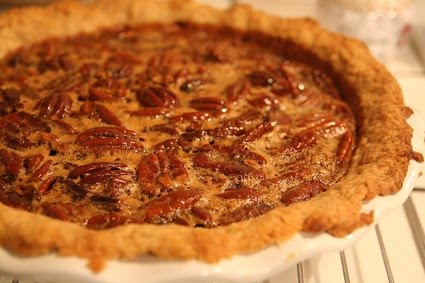
"Pecan" | Used Furniture Review
Thank you to the kind editors of Used Furniture Review for taking my story, "Pecan," an excerpt from a work-in-progress. It can be found here.
Tuesday, March 15, 2011
A Message From J.A. Tyler [A Man Of Glass & All The Ways We Have Failed]
[If you don't like my book I'll write you another book on the inside of that book. Order it, read it. If you don't like it, ship it back to me & I'll write a new book for you on the inside of that book. Yes. This is how much I believe in these words.]
[A Man Of Glass & All The Ways We Have Failed:
http://www.fuguestatepress.com/man.html]
Pick up a copy of J.A. Tyler's latest book from Fugue State Press, here.
Sunday, March 13, 2011
J.A. Tyler | A Man Of Glass & All The Ways We Have Failed
J.A. Tyler's A Man Of Glass & All The Ways We Have Failed is filled with haunting and elegant prose, full of imagery that appeals to all senses. Each word, each line, is packed with energy, and there is this epic tension that forms from sentence to sentence:
Glass crumbles and her hair dries, her body
dries, and the towels go up on the rack and the
boat it goes back in her head, the last drips
running down her ankles. A captain and his
sword, the words she doesn't hear. (20-21)
The work is powerful in its silence, meaning, there isn't any forced language, but rather, the fluidity of diction magnifies each poetic scene:
She checks under her fingernails for a piece of
luggage she lost years ago, it had in it one of
her favorite dresses, a halter-top that flowed
with material, exploded color. (29)
Tyler also explains the abstract--those elements which are open for a variety of definitions, and the author provides these mirrors with the repeated use of certain words and sounds which adds to this creation of the intangible while at the same time, specifies, or narrows those fields of definitions:
Forgetting is salt over the shoulder. Forgetting
is giving up. Forgetting is regret and artists
and making words in wounds and opening
wounds and wounding and winding and
wonderful spilling of letters out holes, mouth
and ears and nose. Head, shoulders, knees, and
toes. (67)
These are just a few examples of how Tyler's A Man Of Glass & All The Ways We Have Failed accomplishes a myriad of feats through precision and emotion, and the work, as a whole, is consistent, as it reinforces Tyler's pictorial nature of language from page to page. It's a wonderful maze.

A Man of Glass & All the Ways We Have Failed
by J. A. Tyler
$12.00
112 pages
ISBN 978-1-879193-24-6
Fugue State Press, 2011
Thursday, March 10, 2011
A.K. Ramanujan | No Amnesiac King | Collected Poems
No Amnesiac King
One knows by now one is no amnesiac
king, whatever mother may say or child believe.
One cannot wait any more in the back
of one's mind for that conspiracy
of three fishermen and a palace cook
to bring, dressed in cardamom and clove,
the one well-timed memorable fish,
so one can cut straight with the royal knife
to the ring waiting in the belly,
and recover at one stroke all lost memory,
make up for the years drained in cocktail glasses
among dry women and pickled men, and give back
body to shadows, and undo the curse
that comes on the boat with love.
Or so it seems,
as I wait for my wife and watch the traffic
in seaside marketplaces and catch
my breath at the flat metal beauty of whole pomfret,
round staring eyes and scales of silver
in the fisherman's pulsing basket,
and will not ask, for I know cannot,
which, if any, in its deadwhite belly
has an uncooked signet ring and a forest
legend of wandering king and waiting
innocent, complete with fawn under tree
and inverse images in the water
of a stream that runs as if it doesn't.

Ramanujan, A.K. Collected Poems.
New Delhi: Oxford University Press, 2010.
126. Print.
Wednesday, March 9, 2011
Scott C. Rogers, On Reading
"Reading is like fucking. Raw, powerful and beautiful the better."
{Scott C. Rogers is the author of the novels Duct-taped Mouth, Celluloid Cowboy and Love Like A Molotov Cocktail to the Chest.}
Tuesday, March 8, 2011

Monday, February 28, 2011
Joyelle McSweeney, On Reading
"Art lays its eggs in its own eyes.
If you want to be an Artist, let Art lay its eggs in your eyes and change your vision; and make you into a Seer; and make you shed a swarm of winged, infectious, dirty Art, equipped with wiggy egg sacs and further compound eyes. You can’t treat reading like some plastic bottled water you have shipped in from Fiji to refresh you as you lay by the pool, a resource you quaff and utilize. You have to pour Art’s acid on your face and let it eat your face and make you a new face, and you have to be looking into a mirror the whole time, and the mirror has to be made of some molten registering substance that records the whole event in a kind of distended smeary disingenuous film. A damage film. If your eyes melt, you know you are doing something right. That’s the Art coming out of your skull. How refreshing!
Some artists whose written, visual, and multimedia work has caused me this kind of permanent damage include Jack Smith; Andy Warhol; Nick Demske; Kim Hyesoon; Fi Jae Lee; Artaud; the critics Mark Seltzer, David Gissen and Achille Mbembe; Deleuze and Guattari; Harryette Mullen; Alice Notley; Cesar Aira; Aime Cesaire; Kara Walker; Bylex Puma; and Raul Zurita. Also the Internet, Slavoj Zizek, my grad students, WikiLeaks and AlJazeera English. Also, Johannes Göransson’s new book, entrance to a colonial pageant in which we all begin to intricate from Christian Peet’s dynamite Tarpaulin Sky Press."

{Joyelle McSweeney is the author of the hybrid novels Flet (Fence Books) and Nylund, the Sarcographer (Tarpaulin Sky Press), as well as two books of poetry from Fence. She edits Action Books and contributes to the collective blog, montevidayo. Please check it out! She also teaches in the MFA Program at Notre Dame.}
Thursday, February 24, 2011
Seth Fischer, On Reading
"Reading is how you learn to write, which is to say it's how you learn to stop lying to yourself about life, about sex, about death, about fear, about love. Only by watching other people tell the truth about themselves can you learn to stop repeating the same boring stories we've all been taught to believe."
{Seth Fischer’s writing has appeared or is forthcoming in Swink, Pank, Guernica, Monkeybicycle, Gertrude, and elsewhere. He’s Sunday Editor at The Rumpus and founding editor of The Splinter Generation and webscribbler.net. During the day, he works in a cubicle not too far from an albino alligator, and he does writing consultation.}
Monday, February 21, 2011
Matt Jasper, On Reading
"As a child I often suffered from bubonic plague. I'm fine now but I use crutches and drag my wooden leg. The leg part is a lie but then so is the plague. What really happened is that I had water on the brain--hydrocephaly. The opposite of a pinhead, I sported a pontoon of sorts that I could not hoist to verticality with the slender crane of my neck. Pressure was building and had to be released via operations, a shunt, wicks, and still the water rose. The way I held or, rather, could not hold my head up made it look as if I were trying to get the fluid to drain from my right ear. That side was heaviest, most affected.
The waters receded, leaving a still enlarged head and a somewhat wasted infant body that dangled from this buoyant balloon. By directed exhalation, I was able to steer the balloon that carried me through cloudless skies and settled me softly upon the mossy grounds of many adventures that don't come into this tale. Almost normal development ensued, yet speech was marked by clang associations and echolalia. Words seemed attached to their own ghosts in ways I was compelled to verbalize. I'd trail off with singsong neologisms or feel the need to call someone a yellow fellow after they said hello to me. I was enraged that I could only read from left to right--instead preferring right to left or down to up. The various ordering schemes that railed and caged phonemes in mouth and on page seemed tyrannical amidst teeming possibilities.
I would have been a sped case but my parents had money for specialists. I outgrew most everything to do with to do with to do with echolalia and then discovered Edgar Allen Poe, Romantic poets, and bad science fiction. Circa age eleven, I would marvel at and then mouth and then speak back at pages of robots, ravens, and dead lovers 'Rolled round in earth's diurnal course.' The words were like water pouring back into my head--restoring an inland sea of language as a fluid having lost all bounds. My head leaned to the right and hung low over the pages. I looked for signs that words and things were secretly connected, alive through connection to a world where all was one. If this oneness seemed a disordered chaos, then the best writers had survived to weld little faucets that led back to it or construct miniature vessels whose design bore every sign of collision with the infinite. The better a text was, the heavier my head would become with the word worlds that filled it. Wordsworth and Shelley appealed to the sublimation of my echolalia. Edgar brought me more rhyme and my first taste of a thick and deadly literary atmosphere lit by paranoia. The bad sci-fi brought to life every mechanical diagram and shard of history contained in my 1917 Book of Knowledge Encyclopedia set, multiplying one actual world into many speculated worlds. I bore canticles and fought for the glory of Dejah Thoris. I began to think of words as a fluid that could turn one space, one head, one self, into many. To release building pressure, I began to lie and to write. I read for a sense of conspiracy with the world, and for the familiar hydraulic pouring in of water and life."
{Matt Jasper is the author of Moth Moon which can be found here and his band, Pneumershonic, can be found here.}
Saturday, February 19, 2011
Sunetra Gupta, On Reading
"I read to 'hear', and thus to be immersed in, particular voices. Writing that is devoid of voice, disengaged from style, carries very little interest for me. In current times, style has come to be seen as an enemy of clarity, and it may well be so, but clarity is not a quality I demand of literature. I prefer to slowly savour passages of intriguing beauty, or gradually penetrate a difficult poem. One of my most fulfilling reading experiences, probably about twenty-five years ago, was with Stephen Spender's translation of Rilke's Duino Elegies -- I remember that I would read an elegy and put it aside hardly comprehending any of it, and then return to it the following evening to try again. Eventually, what it yielded was immensely valuable to me, and not even because the translation itself was particularly satisfactory. I had established, through my labours, a strange relationship with the original text. I had no acquaintance with German, and yet certain words like 'kindertod' pierced me with sadness, and reading the original with Spender's often extremely literal translation beside it created a unique transport. From this I learnt that voices, even foreign voices filtered along odd angles, have the power to transform. More recently, I had a similar experience reading Henry James's little known The Other House. At first, I felt slightly repelled by it, and set it aside expecting to shelve it away sooner or later. But the following day, I picked it up again and felt compelled to reread it, and eventually came to comprehend its choreography. It now stands out to me as a book whose narrative is almost entirely driven by style -- and the disturbance that it caused in my mind opened my eyes to the idea that narratives of integrity always emerge from style, although perhaps not quite as starkly as in The Other House. The words we use to tell a story are not just the clearest way to join a set of pre-determined dots -- they are the words themselves, and the voices that they compose, from which narratives arise."
{Sunetra Gupta's fifth novel, So Good In Black, will be published in the United States by Clockroot Books in March of 2011. She won the 2009 Royal Society Rosalind Franklin Award for her scientific achievements. Sunetra, who lives in Oxford with her husband and two daughters, is Professor of Theoretical Epidemiology at Oxford University's Department of Zoology, having graduated in 1987 from Princeton University and received her PhD from the University of London in 1992. Visit her website here for more information.}
Wednesday, February 9, 2011
Meg Pokrass, On Reading
"reading is:
1. finding that lost set of keys
2. riding on strong, strong shoulders
3. hovering above your row house
4. the fine crust of a new pie
5. grateful drowning
6 a feast made of tiny bites
7. hunger, especially for
8. sex without sex
9. a lap cat that follows
10.defying everything
11. the hook to hang so many hats."
{Meg Pokrass writes flash-fiction, short stories and poetry. Damn Sure Right from Press 53 is her debut collection of flash fiction. Meg serves as Editor-at-Large for BLIP Magazine (formerly Mississippi Review). Her stories, poems, and flash fiction animations have appeared in nearly one hundred online and print publications. Meg creates and runs the popular Fictionaut-Five Author Interview Series for Fictionaut and is associate producer for a new documentary, From Ghost Town to Havana by filmmaker Eugene Corr. Visit her website here for more information.}
Sunday, February 6, 2011
Randall Brown, On Reading
"I write and read primarily very short fiction, and I often hear the idea that these compressed kind of works are written for the ADD generation of readers. I used to think, 'Well, of course that's true.' But lately I've been thinking that I attend to very short fiction with an intensity that I don't necessarily have when reading longer pieces. I tend to drift in and out of longer works, and so much of the words of a novel seem to exist to be forgotten. I love how very short work demands my attention. It's why I love reading poetry. I find a very intense focus over a very short time is the kind of reading I love to do these days. Maybe that is a bit ADD. Maybe it's something else."
{Randall Brown is the author of Mad To Live (Flume Press). He is the founder of Matter Press, and he blogs regularly at FlashFiction.Net. Visit him here for more information.}
Tuesday, February 1, 2011
Norman Lock, On Reading
"We read if for no other reason than to be more than we are – to go beyond ourselves, if only a short way; to know, if only in a small way, Others and, finally, ourselves. To read what we already know, therefore, is to confirm ourselves in our confinement, to draw the shade on the wider prospect, to narrow life deliberately as a river is narrowed by the channel that humbles it. To read only what is inscribed in the forms to which our reading has accustomed us is to remain at anchor, on the verge of oceanic experience – tumultuous, dangerous, and thrilling; is to lose the chance to be enraptured or – an equally valuable emotion – terrified by life, as life is made manifest by art. Reading is our consolation for living only one life. Reading is another form of life – comparable in importance and largesse."
{Norman Lock has written novels and short fiction as well as stage, radio and screen plays. He received the 1979 Aga Kahn Prize, given by The Paris Review. He is a recipient of fellowships in prose from the New Jersey Council on the Arts and from the Pennsylvania Council on the Arts – both for fiction – and, in 2011, for poetry from the National Endowment for the Arts. His latest prose works are the novels Shadowplay and The King of Sweden, published by Ellipsis Press and Ravenna Press, respectively, and the short-fiction collection Grim Tales, released this year in a new version by Mud Luscious Press. Norman lives in Aberdeen, New Jersey, with his wife, Helen. Visit his website here for more information.}
Monday, January 31, 2011
Pedro Ponce, On Reading
"Writers perform on the page; as readers we get to experience a writer’s performance, preserved across space and time, as live as it gets."
{Pedro Ponce is the author of Alien Autopsy, a story collection just out from Cow Heavy Books. His novella Homeland: A Panorama in 50 States is forthcoming from Seven Kitchens Press.}
Friday, January 28, 2011
Ethel Rohan, On Reading
Breathing Books
"I read, and the tiny diamonds in my wedding band are thrown back on the page; one, two … eight tiny stones, tiny refractions of light. I move my hand so and the brilliant reflections vanish. Move my hand again and there they are back. There, gone. There, gone. Safely in and out.
As a girl, I didn’t own jewelry, didn’t have anything but the words coming off the page, and me right there inside the story. Safely in and out. My mother called and called, chores and mending to be done, but she couldn’t get me out of the page, out of the words, out of the story. She raised the head of the sweeping brush and brought it down on my book, my lap, and first one knee, then the second knee. Her face the most terrible cover.
Something died that day. Something I’ve yet to name. Not my love for books, for sweeping floors, for my mother. All that lives on. Invincible."
{Ethel Rohan is the author of the story collection, Cut Through The Bone (Dark Sky Books), and her second collection of stories, Hard To Say, will be published by PANK in 2011. Visit her here for more information.}
Wednesday, January 26, 2011
Forrest Roth, On Reading
"During my undergraduate studies, I once remarked to a fellow English student / very good friend how I couldn’t begin to comprehend the nuances of a novel or any other long-ish work until I had read it at least twice. He gave me a reproachful, funny look. And I must give my former self a funny look, too, but without the reproach. I try to be forgiving of my past idiosyncrasies, though I don’t blame the friend now for thinking me a bit daft. Time constraints aside, I can see the big trap of this approach relating to my current predicament, among other reasons.
As I’m in my second year of English Ph.D. studies, I find most of the so-called reading I do—for coursework or a handful of comprehensive exams—is certainly not the same emphatic reading that actively engages me for another go-around (barring the off-hand chance I’ve picked up something sublime, unrelated to academics), yet I’ve acquiesced. It’s a sort of faith I may figure out what those impersonal words ever wanted from poor little me in the first place.
I recall a notion about reading for pleasure which I, and perhaps every reader, unconsciously attribute to that extra-educational plane of Youth when nothing wanted to bother us. Sadly this escape escapes me—even as a creative writer who thrives on loving diversions like other creative writers. I hope to retrieve it someday when Higher Education no longer finds me useful or vice versa. Then, I suppose, it will become the grand nostalgia I will have wanted to avoid all my life for some strange reason I keep kicking around."
{Forrest Roth is the author of a novella, Line and Pause (BlazeVox Books), Co-Editor In Chief of Rougarou, and a Ph.D. student at the University of Louisiana-Lafayette. Visit him at
:: totemic :: for more information.}
Monday, January 24, 2011

Wednesday, January 19, 2011


Subscribe to:
Posts (Atom)