Saturday, April 2, 2011
Jordan Castro, On Reading
"In 6th grade, I noticed similarities between punk rock and politics, so I became obsessed with politics. In 8th grade, I noticed similarities between politics and literature, so I became obsessed with literature. In 10th grade, I noticed similarities between literature and drugs, so I became obsessed with drugs. In 11th grade, I noticed similarities between drugs and rap music, so I became obsessed with rap music. Now, I still don’t know anything about anything but I read all the time to explore it.
If reading means anything to me, I think it means meaning can be found in anything, but will be found in something, so it might as well be reading.
Or, no – I don’t know.
I think I might’ve just made that up.
I don’t think I feel able to write anything 'true' about reading because, to me, reading is not concerned with 'truth.' I enjoy reading as a means of exploring, I think, not defining. Ideally, I think I’d enjoy life in this manner too. I really don’t know. I just typed 'I think I’m just retarded' then deleted it and thought a little about Stephen Elliot in a manner like I meant to think about something else but 'accidentally' thought about Stephen Elliot instead."
{Jordan Castro (b. 1992) is the co-author of Cute (Thumbscrews Press, 2011) and two other chapbooks. He is the author of Supercomputer (Deckfight Press, 2011) and two other e-books. He maintains a blog and a twitter account.}

Friday, April 1, 2011
Tania Hershman, On Reading
"Reading is my comfort and my stimulation, taking me away and bringing me home. Being read has shown me how each reader reads alone, in their own way, and each reader puts themselves inside the word of worlds according to their own selves. Reading constantly changes my writing, I am inspired by shapes and arrangements of words on the page - and yes, for me, it is the printed page, it may always be. I can't imagine being a writer without reading. If I haven't read for several days the thirst starts to well up."
{Tania Hershman is the author of The White Road And Other Stories. For more information, visit her website here.}
Thursday, March 31, 2011
An Interview With J.A. Tyler
With My Eyes Closed: An Interview With J.A. Tyler can be found at Outsider Writers Collective.
And if you haven't yet, please check out his latest book, A Man Of Glass & All The Ways We Have Failed, which is available at Fugue State Press.
Tuesday, March 29, 2011
Charlie Kaufman | Writing
"To begin... To begin... How to start? I'm hungry. I should get coffee. Coffee would help me think. Maybe I should write something first, then reward myself with coffee. Coffee and a muffin. Okay, so I need to establish the themes. Maybe a banana-nut. That's a good muffin."

Adaptation
Directed by Spike Jonze
114 minutes
IMDb
Sunday, March 27, 2011
Saturday, March 26, 2011
Robert Coover | Deep South Festival Of Writers
Robert Coover
Deep South Festival Of Writers
March 26, 2011
University Of Louisiana At Lafayette
Fletcher Auditorium
7:30 PM

Thursday, March 24, 2011
Kendra Grant Malone | Everything Is Quiet
Kendra Grant Malone's Everything Is Quiet is a chemical reaction yielded from the mixture of confusion, hate, disgust, sex, body parts, love, and cats. These spectrums of emotions explore those inner crevices of the brain--the author takes the unknown, makes it known, and then puts it back in a pocket or a drawer. In this collection of poems, Malone doesn't show any restraint, but instead, not only does she reveal her cards, she shows her poker face, and then, she'll splash the pot. In addition to this 'in your face' tone, Malone, amazingly, at the same, creates this gentility that both softens and hardens the human condition. Take, "Faceless," for example:
he said he wanted to
destroy my face but
he did me no such favor. (22)
In "Three Hundred Dollar Coat," the narrator conveys this push-pull feeling, creating this quiet chaos surrounding the concepts of guilt and love and the need to feel both, exemplifying the complexities of emotions. Here is the guilt:
i walked down the sidewalk
in my three hundred dollar coat
i felt absurd
because my rent doesn't cost
that much more. (74)
The love is shown when the narrator explains when she bought the coat--when her father had visited her and they had gone shopping together:
he saw the three hundred dollar coat
and touched the fur collar
and smiled
when i tried it on
he grabbed my hand and spun me
a vision he said
and i knew
it did look nice
and i bought the three hundred dollar coat on credit. (74)
And it is these combined emotions that create these realms of profound conflicts, providing glimpses into the intricacies of the mind, and this tugging and tapping can be found throughout the collection of poems. Everything Is Quiet is a pillow. Sometimes, it's a cold pillow, and sometimes the pillow is warm. And sometimes the pillow is damp, and sometimes the pillow is lonely. Through its quietness, there is this power that glows from underneath--a certain sense of vulnerability that deceives, because at the end of it all, the poems are full of muscles.

Everything Is Quiet
by Kendra Grant Malone
$12
89 pages
ISBN 978-0-578-06801-5
Scrambler Books, 2010
Monday, March 21, 2011
From Hulme's "Romanticism and Classicism"
"Put shortly, these are the two views, then. One, that man is intrinsically good, spoilt by circumstance; and the other that he is intrinsically limited, but disciplined by order and tradition to something fairly decent. To the one party man’s nature is like a well, to the other like a bucket. The view which regards man as a well, a reservoir full of possibilities, I call the romantic; the one which regards him as a very finite and fixed creature, I call the classical." (para. 13)
"What I mean by classical in verse, then, is this. That even in the most imaginative flights there is always a holding back, a reservation. The classical poet never forgets this finiteness, this limit of man. He remembers always that he is mixed up with earth. He may jump, but he always returns back; he never flies away into the circumambient gas." (para. 18)
"You might say if you wished that the whole of the romantic attitude seems to crystallise in verse round metaphors of flight. Hugo is always flying, flying over abysses, flying up into the eternal gases. The word infinite in every other line." (para. 19)
Read T.E. Hulme's essay, "Romanticism and Classicism," at The Poetry Foundation.
Sunday, March 20, 2011
tabula rasa
Should you know the rules and the basics before breaking them? Or should you just go ahead and just break them? Are there rules? Do you need rules? What if it was all taken away? What if you were the first person to write? Would you write for others? Would you write for yourself? If it was all taken away--books, journals, essays, diaries, notes, articles--and there was nothing there, just you and a pen and a blank slate, what would you write? Could you write? Would you automatically try to think about the past, and when you find out that you're just alone, when there are just empty images, what would you write? Can writing progress? If so, can writing progress if you don't study the past and the present works--if you are in your own fortified sphere--would it matter? Does writing need to progress? What is progression? Is regression, progression? Who was the first person, the individual, that sole person, to write--who were you? What were you thinking? Why? What compelled you? Was it a to-do list? Was it angry? Sad? Full of love? Was it just a letter or word or sentence? Did you write a second letter or word or sentence? A third? What are the rules? What are the basics? Do you need them? Where are the boundaries? What is the starting point? Will there be an ending point? Is there already an ending point? What do you need to know? What don't you need to know? What is fiction? What is nonfiction? What is science fiction? What is romance? What is mystery? Is it all a mystery? Is one book just a continuation from a previous book, and that, a continuation from a previous book--is it a straight line? Is it skewed? If writing wasn't required, if there wasn't writing or language classes or education or schools, would you write? Could you write? What is plot? What is narrative? What is clear and concise? What is explaining? What is showing? What are details? What are characters? Can there be a story without characters? Does a character have to be a living or dead being? Can it be an object? Can it be anything? Does it have to be anything? Does a character have to grow or change? As soon as the pen touches the pad, is there a character? What is sentence structuring? What is a run-on sentence? Would a run-on sentence be a run-on sentence if there was no one else around? Would a run-on sentence be a run-on sentence if there weren't any rules? Does writing need to be in context? Does writing need to be understood? What is gibberish? Was gibberish, at one point, the rule? Can writing be understood if there wasn't any writing but your own? Do you need to know the answers? Do the answers matter? If there aren't any answers, do want to know the rules? Do you want to know the basics? What is considered a rule? What is considered basic? What is considered breaking it all and doing whatever? Does "asdf hjklg qwert yuiops pppam bnbvvvxs" mean something? Does "go stop roll eat live die" need anything else? What is poetry? What is prose? What flows? What is choppy? What are your intentions? What are you trying to do? What are you not trying to do? What's in a word? What's in a sentence? Why? If there weren't anything before you, would you look ahead? Is it necessary to know what has been done before? If not, should we know anyway? Where does the comma go?
Joyelle McSweeney And Johannes Göransson Reading At The Deep South Festival Of Writers
Joyelle McSweeney and Johannes Göransson
Deep South Festival Of Writers
University Of Louisiana at Lafayette
March 15, 2011
Joyelle McSweeney:
Johannes Göransson:
Also Visit:
Action Books and Montevidayo.
Saturday, March 19, 2011

Friday, March 18, 2011
Matt Bell | How They Were Found
Matt Bell's How They Were Found dives into dark worlds, and the pages, themselves, become mirrors, revealing these strands of beauty found in the most unusual circumstances. These stories are full of bruises, and machines, and blood, and they drip from one line to the next, creating these macabre scenes and magnifying the aesthetics of broken realities. Not only do these stories hold mirrors up to the readers, but they also hold mirrors up to the characters themselves, creating these opposites that pull and push each other until the end has arrived.
In "Dredge," Bell gives life to the dead and at the same time, he makes the living seem dead, or near death:
The drowned girl drips everywhere, soaking the cheap
cloth of the Ford's back seat. (108)
It seems as though the dead girl is still alive as she is in the car, perhaps being a nuisance, in a sense, by messing up the seat with her dripping and "soaking." Additionally, that first line, itself, is amazingly tricky: "the drowned girl drips everywhere." It's not just any girl dripping in the car, but a "drowned girl," and in a subtle way, Bell makes the dead girl lifelike as any soaked human would be dripping, and drenching the seat of a car. It's the casualness of the content that makes the dead girl seem alive. Then, later on, Punter, the main character of the story, sits in the car with her and then drives off as if all is normal:
Looking in the rearview, Punter smiles at the
drowned girl, waits for her to smile back. (109)
So here, the dead girl is described and being treated like she is alive. Then, throughout the story, Bell portrays Punter, who is alive and dealing with the dead girl, as though he is the one who is dead…or should be dead:
Punter wakes up choking in the dark, his throat closed
off with something, phlegm or pus or he doesn't know
what. (125)
And then later on, "Punter coughs, not caring where the blood goes" (131).
Punter is described as if he doesn't have much time left, while the dead girl is described as the opposite. The relationship between the dead girl and Punter goes even deeper--there is this mirroring of "the drowned girl" and the "choking" Punter who incessantly "coughs." Perhaps, the dead girl infects Punter or lives through him, or perhaps, Punter feels the warmth of death through the girl. And throughout these stories, Bell makes the gloom and the horrid fascinating, he makes the darkness breathe, and he makes the living suffer--both, in a graceful manner. What does being alive really mean? What does being dead really mean? Read How They Were Found to seek the answers and to play with these mirrors.

How They Were Found
by Matt Bell
$13.95
256 pages
ISBN 978-0982151259
Keyhole Press, 2010
David Cotrone, On Reading
"Often I feel lonely. As someone who writes whenever I can, and as someone who reads with the same lust, I might not be helping myself. Writing is a lonely activity, so is reading. Writers and readers really know loneliness. But so a book is a place two lonely people can meet, and that's everything to me."
{David Cotrone's writing has appeared in Fifty-Two Stories, The Rumpus, Dark Sky Magazine, elimae and elsewhere. He is the editor of Used Furniture Review.}
Thursday, March 17, 2011

Rob Roberge | Working Backwards From The Worst Moment Of My Life
Rob Roberge's Working Backwards From The Worst Moment Of My Life is gritty and raw, and it allows the reader to understand what happens when all is taken away--when we are at the lowest points of our lives. We are able to see the human body, without skin and bones--we are able to see the soul. Roberge reveals to the world what we don't see when we turn and look the other way. This collection of stories is emotional, and pure, and it provides a beautiful and amazing beat to the human heart.

Working Backwards From The Worst Moment Of My Life
by Rob Roberge
$19.95
112 pages
ISBN 978-1-59709-165-7
Red Hen Press, 2010
Wednesday, March 16, 2011
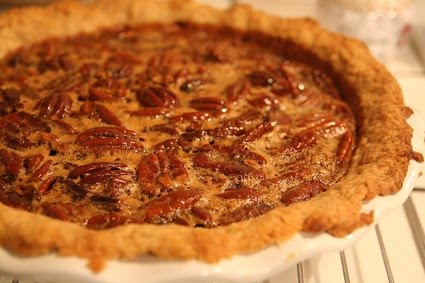
"Pecan" | Used Furniture Review
Thank you to the kind editors of Used Furniture Review for taking my story, "Pecan," an excerpt from a work-in-progress. It can be found here.
Tuesday, March 15, 2011
A Message From J.A. Tyler [A Man Of Glass & All The Ways We Have Failed]
[If you don't like my book I'll write you another book on the inside of that book. Order it, read it. If you don't like it, ship it back to me & I'll write a new book for you on the inside of that book. Yes. This is how much I believe in these words.]
[A Man Of Glass & All The Ways We Have Failed:
http://www.fuguestatepress.com/man.html]
Pick up a copy of J.A. Tyler's latest book from Fugue State Press, here.
Sunday, March 13, 2011
J.A. Tyler | A Man Of Glass & All The Ways We Have Failed
J.A. Tyler's A Man Of Glass & All The Ways We Have Failed is filled with haunting and elegant prose, full of imagery that appeals to all senses. Each word, each line, is packed with energy, and there is this epic tension that forms from sentence to sentence:
Glass crumbles and her hair dries, her body
dries, and the towels go up on the rack and the
boat it goes back in her head, the last drips
running down her ankles. A captain and his
sword, the words she doesn't hear. (20-21)
The work is powerful in its silence, meaning, there isn't any forced language, but rather, the fluidity of diction magnifies each poetic scene:
She checks under her fingernails for a piece of
luggage she lost years ago, it had in it one of
her favorite dresses, a halter-top that flowed
with material, exploded color. (29)
Tyler also explains the abstract--those elements which are open for a variety of definitions, and the author provides these mirrors with the repeated use of certain words and sounds which adds to this creation of the intangible while at the same time, specifies, or narrows those fields of definitions:
Forgetting is salt over the shoulder. Forgetting
is giving up. Forgetting is regret and artists
and making words in wounds and opening
wounds and wounding and winding and
wonderful spilling of letters out holes, mouth
and ears and nose. Head, shoulders, knees, and
toes. (67)
These are just a few examples of how Tyler's A Man Of Glass & All The Ways We Have Failed accomplishes a myriad of feats through precision and emotion, and the work, as a whole, is consistent, as it reinforces Tyler's pictorial nature of language from page to page. It's a wonderful maze.

A Man of Glass & All the Ways We Have Failed
by J. A. Tyler
$12.00
112 pages
ISBN 978-1-879193-24-6
Fugue State Press, 2011
Thursday, March 10, 2011
A.K. Ramanujan | No Amnesiac King | Collected Poems
No Amnesiac King
One knows by now one is no amnesiac
king, whatever mother may say or child believe.
One cannot wait any more in the back
of one's mind for that conspiracy
of three fishermen and a palace cook
to bring, dressed in cardamom and clove,
the one well-timed memorable fish,
so one can cut straight with the royal knife
to the ring waiting in the belly,
and recover at one stroke all lost memory,
make up for the years drained in cocktail glasses
among dry women and pickled men, and give back
body to shadows, and undo the curse
that comes on the boat with love.
Or so it seems,
as I wait for my wife and watch the traffic
in seaside marketplaces and catch
my breath at the flat metal beauty of whole pomfret,
round staring eyes and scales of silver
in the fisherman's pulsing basket,
and will not ask, for I know cannot,
which, if any, in its deadwhite belly
has an uncooked signet ring and a forest
legend of wandering king and waiting
innocent, complete with fawn under tree
and inverse images in the water
of a stream that runs as if it doesn't.

Ramanujan, A.K. Collected Poems.
New Delhi: Oxford University Press, 2010.
126. Print.
Wednesday, March 9, 2011
Scott C. Rogers, On Reading
"Reading is like fucking. Raw, powerful and beautiful the better."
{Scott C. Rogers is the author of the novels Duct-taped Mouth, Celluloid Cowboy and Love Like A Molotov Cocktail to the Chest.}
Tuesday, March 8, 2011

Monday, February 28, 2011
Joyelle McSweeney, On Reading
"Art lays its eggs in its own eyes.
If you want to be an Artist, let Art lay its eggs in your eyes and change your vision; and make you into a Seer; and make you shed a swarm of winged, infectious, dirty Art, equipped with wiggy egg sacs and further compound eyes. You can’t treat reading like some plastic bottled water you have shipped in from Fiji to refresh you as you lay by the pool, a resource you quaff and utilize. You have to pour Art’s acid on your face and let it eat your face and make you a new face, and you have to be looking into a mirror the whole time, and the mirror has to be made of some molten registering substance that records the whole event in a kind of distended smeary disingenuous film. A damage film. If your eyes melt, you know you are doing something right. That’s the Art coming out of your skull. How refreshing!
Some artists whose written, visual, and multimedia work has caused me this kind of permanent damage include Jack Smith; Andy Warhol; Nick Demske; Kim Hyesoon; Fi Jae Lee; Artaud; the critics Mark Seltzer, David Gissen and Achille Mbembe; Deleuze and Guattari; Harryette Mullen; Alice Notley; Cesar Aira; Aime Cesaire; Kara Walker; Bylex Puma; and Raul Zurita. Also the Internet, Slavoj Zizek, my grad students, WikiLeaks and AlJazeera English. Also, Johannes Göransson’s new book, entrance to a colonial pageant in which we all begin to intricate from Christian Peet’s dynamite Tarpaulin Sky Press."

{Joyelle McSweeney is the author of the hybrid novels Flet (Fence Books) and Nylund, the Sarcographer (Tarpaulin Sky Press), as well as two books of poetry from Fence. She edits Action Books and contributes to the collective blog, montevidayo. Please check it out! She also teaches in the MFA Program at Notre Dame.}
Thursday, February 24, 2011
Seth Fischer, On Reading
"Reading is how you learn to write, which is to say it's how you learn to stop lying to yourself about life, about sex, about death, about fear, about love. Only by watching other people tell the truth about themselves can you learn to stop repeating the same boring stories we've all been taught to believe."
{Seth Fischer’s writing has appeared or is forthcoming in Swink, Pank, Guernica, Monkeybicycle, Gertrude, and elsewhere. He’s Sunday Editor at The Rumpus and founding editor of The Splinter Generation and webscribbler.net. During the day, he works in a cubicle not too far from an albino alligator, and he does writing consultation.}
Monday, February 21, 2011
Matt Jasper, On Reading
"As a child I often suffered from bubonic plague. I'm fine now but I use crutches and drag my wooden leg. The leg part is a lie but then so is the plague. What really happened is that I had water on the brain--hydrocephaly. The opposite of a pinhead, I sported a pontoon of sorts that I could not hoist to verticality with the slender crane of my neck. Pressure was building and had to be released via operations, a shunt, wicks, and still the water rose. The way I held or, rather, could not hold my head up made it look as if I were trying to get the fluid to drain from my right ear. That side was heaviest, most affected.
The waters receded, leaving a still enlarged head and a somewhat wasted infant body that dangled from this buoyant balloon. By directed exhalation, I was able to steer the balloon that carried me through cloudless skies and settled me softly upon the mossy grounds of many adventures that don't come into this tale. Almost normal development ensued, yet speech was marked by clang associations and echolalia. Words seemed attached to their own ghosts in ways I was compelled to verbalize. I'd trail off with singsong neologisms or feel the need to call someone a yellow fellow after they said hello to me. I was enraged that I could only read from left to right--instead preferring right to left or down to up. The various ordering schemes that railed and caged phonemes in mouth and on page seemed tyrannical amidst teeming possibilities.
I would have been a sped case but my parents had money for specialists. I outgrew most everything to do with to do with to do with echolalia and then discovered Edgar Allen Poe, Romantic poets, and bad science fiction. Circa age eleven, I would marvel at and then mouth and then speak back at pages of robots, ravens, and dead lovers 'Rolled round in earth's diurnal course.' The words were like water pouring back into my head--restoring an inland sea of language as a fluid having lost all bounds. My head leaned to the right and hung low over the pages. I looked for signs that words and things were secretly connected, alive through connection to a world where all was one. If this oneness seemed a disordered chaos, then the best writers had survived to weld little faucets that led back to it or construct miniature vessels whose design bore every sign of collision with the infinite. The better a text was, the heavier my head would become with the word worlds that filled it. Wordsworth and Shelley appealed to the sublimation of my echolalia. Edgar brought me more rhyme and my first taste of a thick and deadly literary atmosphere lit by paranoia. The bad sci-fi brought to life every mechanical diagram and shard of history contained in my 1917 Book of Knowledge Encyclopedia set, multiplying one actual world into many speculated worlds. I bore canticles and fought for the glory of Dejah Thoris. I began to think of words as a fluid that could turn one space, one head, one self, into many. To release building pressure, I began to lie and to write. I read for a sense of conspiracy with the world, and for the familiar hydraulic pouring in of water and life."
{Matt Jasper is the author of Moth Moon which can be found here and his band, Pneumershonic, can be found here.}
Saturday, February 19, 2011
Sunetra Gupta, On Reading
"I read to 'hear', and thus to be immersed in, particular voices. Writing that is devoid of voice, disengaged from style, carries very little interest for me. In current times, style has come to be seen as an enemy of clarity, and it may well be so, but clarity is not a quality I demand of literature. I prefer to slowly savour passages of intriguing beauty, or gradually penetrate a difficult poem. One of my most fulfilling reading experiences, probably about twenty-five years ago, was with Stephen Spender's translation of Rilke's Duino Elegies -- I remember that I would read an elegy and put it aside hardly comprehending any of it, and then return to it the following evening to try again. Eventually, what it yielded was immensely valuable to me, and not even because the translation itself was particularly satisfactory. I had established, through my labours, a strange relationship with the original text. I had no acquaintance with German, and yet certain words like 'kindertod' pierced me with sadness, and reading the original with Spender's often extremely literal translation beside it created a unique transport. From this I learnt that voices, even foreign voices filtered along odd angles, have the power to transform. More recently, I had a similar experience reading Henry James's little known The Other House. At first, I felt slightly repelled by it, and set it aside expecting to shelve it away sooner or later. But the following day, I picked it up again and felt compelled to reread it, and eventually came to comprehend its choreography. It now stands out to me as a book whose narrative is almost entirely driven by style -- and the disturbance that it caused in my mind opened my eyes to the idea that narratives of integrity always emerge from style, although perhaps not quite as starkly as in The Other House. The words we use to tell a story are not just the clearest way to join a set of pre-determined dots -- they are the words themselves, and the voices that they compose, from which narratives arise."
{Sunetra Gupta's fifth novel, So Good In Black, will be published in the United States by Clockroot Books in March of 2011. She won the 2009 Royal Society Rosalind Franklin Award for her scientific achievements. Sunetra, who lives in Oxford with her husband and two daughters, is Professor of Theoretical Epidemiology at Oxford University's Department of Zoology, having graduated in 1987 from Princeton University and received her PhD from the University of London in 1992. Visit her website here for more information.}
Wednesday, February 9, 2011
Meg Pokrass, On Reading
"reading is:
1. finding that lost set of keys
2. riding on strong, strong shoulders
3. hovering above your row house
4. the fine crust of a new pie
5. grateful drowning
6 a feast made of tiny bites
7. hunger, especially for
8. sex without sex
9. a lap cat that follows
10.defying everything
11. the hook to hang so many hats."
{Meg Pokrass writes flash-fiction, short stories and poetry. Damn Sure Right from Press 53 is her debut collection of flash fiction. Meg serves as Editor-at-Large for BLIP Magazine (formerly Mississippi Review). Her stories, poems, and flash fiction animations have appeared in nearly one hundred online and print publications. Meg creates and runs the popular Fictionaut-Five Author Interview Series for Fictionaut and is associate producer for a new documentary, From Ghost Town to Havana by filmmaker Eugene Corr. Visit her website here for more information.}
Sunday, February 6, 2011
Randall Brown, On Reading
"I write and read primarily very short fiction, and I often hear the idea that these compressed kind of works are written for the ADD generation of readers. I used to think, 'Well, of course that's true.' But lately I've been thinking that I attend to very short fiction with an intensity that I don't necessarily have when reading longer pieces. I tend to drift in and out of longer works, and so much of the words of a novel seem to exist to be forgotten. I love how very short work demands my attention. It's why I love reading poetry. I find a very intense focus over a very short time is the kind of reading I love to do these days. Maybe that is a bit ADD. Maybe it's something else."
{Randall Brown is the author of Mad To Live (Flume Press). He is the founder of Matter Press, and he blogs regularly at FlashFiction.Net. Visit him here for more information.}
Tuesday, February 1, 2011
Norman Lock, On Reading
"We read if for no other reason than to be more than we are – to go beyond ourselves, if only a short way; to know, if only in a small way, Others and, finally, ourselves. To read what we already know, therefore, is to confirm ourselves in our confinement, to draw the shade on the wider prospect, to narrow life deliberately as a river is narrowed by the channel that humbles it. To read only what is inscribed in the forms to which our reading has accustomed us is to remain at anchor, on the verge of oceanic experience – tumultuous, dangerous, and thrilling; is to lose the chance to be enraptured or – an equally valuable emotion – terrified by life, as life is made manifest by art. Reading is our consolation for living only one life. Reading is another form of life – comparable in importance and largesse."
{Norman Lock has written novels and short fiction as well as stage, radio and screen plays. He received the 1979 Aga Kahn Prize, given by The Paris Review. He is a recipient of fellowships in prose from the New Jersey Council on the Arts and from the Pennsylvania Council on the Arts – both for fiction – and, in 2011, for poetry from the National Endowment for the Arts. His latest prose works are the novels Shadowplay and The King of Sweden, published by Ellipsis Press and Ravenna Press, respectively, and the short-fiction collection Grim Tales, released this year in a new version by Mud Luscious Press. Norman lives in Aberdeen, New Jersey, with his wife, Helen. Visit his website here for more information.}
Monday, January 31, 2011
Pedro Ponce, On Reading
"Writers perform on the page; as readers we get to experience a writer’s performance, preserved across space and time, as live as it gets."
{Pedro Ponce is the author of Alien Autopsy, a story collection just out from Cow Heavy Books. His novella Homeland: A Panorama in 50 States is forthcoming from Seven Kitchens Press.}
Friday, January 28, 2011
Ethel Rohan, On Reading
Breathing Books
"I read, and the tiny diamonds in my wedding band are thrown back on the page; one, two … eight tiny stones, tiny refractions of light. I move my hand so and the brilliant reflections vanish. Move my hand again and there they are back. There, gone. There, gone. Safely in and out.
As a girl, I didn’t own jewelry, didn’t have anything but the words coming off the page, and me right there inside the story. Safely in and out. My mother called and called, chores and mending to be done, but she couldn’t get me out of the page, out of the words, out of the story. She raised the head of the sweeping brush and brought it down on my book, my lap, and first one knee, then the second knee. Her face the most terrible cover.
Something died that day. Something I’ve yet to name. Not my love for books, for sweeping floors, for my mother. All that lives on. Invincible."
{Ethel Rohan is the author of the story collection, Cut Through The Bone (Dark Sky Books), and her second collection of stories, Hard To Say, will be published by PANK in 2011. Visit her here for more information.}
Wednesday, January 26, 2011
Forrest Roth, On Reading
"During my undergraduate studies, I once remarked to a fellow English student / very good friend how I couldn’t begin to comprehend the nuances of a novel or any other long-ish work until I had read it at least twice. He gave me a reproachful, funny look. And I must give my former self a funny look, too, but without the reproach. I try to be forgiving of my past idiosyncrasies, though I don’t blame the friend now for thinking me a bit daft. Time constraints aside, I can see the big trap of this approach relating to my current predicament, among other reasons.
As I’m in my second year of English Ph.D. studies, I find most of the so-called reading I do—for coursework or a handful of comprehensive exams—is certainly not the same emphatic reading that actively engages me for another go-around (barring the off-hand chance I’ve picked up something sublime, unrelated to academics), yet I’ve acquiesced. It’s a sort of faith I may figure out what those impersonal words ever wanted from poor little me in the first place.
I recall a notion about reading for pleasure which I, and perhaps every reader, unconsciously attribute to that extra-educational plane of Youth when nothing wanted to bother us. Sadly this escape escapes me—even as a creative writer who thrives on loving diversions like other creative writers. I hope to retrieve it someday when Higher Education no longer finds me useful or vice versa. Then, I suppose, it will become the grand nostalgia I will have wanted to avoid all my life for some strange reason I keep kicking around."
{Forrest Roth is the author of a novella, Line and Pause (BlazeVox Books), Co-Editor In Chief of Rougarou, and a Ph.D. student at the University of Louisiana-Lafayette. Visit him at
:: totemic :: for more information.}
Monday, January 24, 2011

Wednesday, January 19, 2011


Monday, January 17, 2011
Wednesday, January 12, 2011

Sunday, January 9, 2011

Friday, January 7, 2011
Lord Byron
Directed by Zack Godshall
A Zack Godshall & Ross Brupbacher Production
Selected for the 2011 Sundance Film Festival
Thursday, January 6, 2011


Wednesday, December 22, 2010
Tuesday, December 14, 2010
Monday, December 13, 2010
Sunday, December 12, 2010
Wednesday, December 8, 2010
xTx, On Reading
"Reading, for me, is a place to go, a place to be. It’s sitting on the bottom porch step, bare feet in the dirt, looking up at my still-young mother sitting on the top step in shorts and tank top, hair falling forward, legs crossed, long and bare, paperback in her lap, ignoring me for the words. Reading is a dirt-floor basement, with a hidden corner filled with boxes turned sideways, crammed full of well-worn paperbacks, spines lined with white vertical fold marks obscuring titles, authors. Reading is the smell of the musty dank and the damp of the pages waiting for time to turn them yellow. Reading is taking from those boxes, sitting cross legged in the basement dirt, turning page after page, finding out and then understanding what kept my mother ignoring me, summer day after summer day after summer day."
{xTx is a writer living in Southern California. She has been published in places like PANK, SmokeLong, Monkeybicycle, elimae, kill author, and Wigleaf. She has a free e-book entitled Nobody Trusts a Black Magician available at Nonpress. Her new chapbook He Is Talking to the Fat Lady was released November 15th from Safety Third Enterprises. She says nothing at No Time To Say It.}
Tuesday, November 30, 2010
Matt DeBenedictis, On Reading
"I first read out of spite, hoping to just see one series of bookshelves destroyed. Far from an actual decimation I only craved to see the ideas within the books worth little more than dust.
My families' library stood larger than the room itself, certain bound volumes created a shadow larger than myself while other books emitted a musty smell I have (thankfully) not come across since. Where a posed family photo should have stood a picture of Ronald Reagan commanded the room. He was riding a horse passing the part of America where militias attend christenings.
Inspired to defy I read anything that waved a blade at that room. It wasn't until much later that I began to read out of love for a story, a drawn feeling for a style, or anything close to literature.
I wish I could have started reading for that reason younger; uptight, over-political younger years, a defiance purely bred in the 'burbs.
I could have lit a match and read what matters to me now so much sooner."
{Matt DeBenedictis is the author of three chapbooks including Congratulations! There's No last Place if Everyone is Dead. He runs the press Safety Third Enterprises and talks with music artists for a un-secure living. His internet home is wordsforguns.com.}
Monday, November 22, 2010
Joshua Mohr, On Reading
"I used to think reading could change the world--that if we looked through different characters' eyes and hearts and souls, we might learn empathy. We might learn to be nicer to one another. But I'm getting older and more 'seasoned' (see: tired, lazy, disillusioned), and now I think of reading/writing mostly as entertainment. It's better than TV because it actively engages your brain--quality calories versus empty calories--and if the writing is good, for a moment, however brief, you connect with the world in an entirely new way. Of course, you come down and go back to being your normal self, but there's that flash, that blinding, ephemeral flash where you embody a character and experience a life that's entirely new."
{Joshua Mohr is the author of the novels Termite Parade, which was an Editors’ Choice on The New York Times Best Seller List, and Some Things that Meant the World to Me, one of O Magazine's Top 10 reads of 2009. He has an MFA from the University of San Francisco and has published numerous short stories and essays in publications such as The New York Times Book Review, 7×7, The Bay Guardian, ZYZZYVA, The Rumpus, The Nervous Breakdown, among many others. He lives in San Francisco and teaches fiction writing. Please visit him here.}
Tuesday, November 16, 2010
Rolli, On Reading
"The love of my life - wife, mistress, concubine - has always been - books. I am, unashamedly, a promiscuous, polygamous, adulterous lover of books. I've taken to bed a different book every night of my life. Apologies, of course, to those who can (and do) read the same shop-worn soft cover for twenty or thirty years at a stretch, but I could never manage it.
I love the figure of a well-made book, the texture. I never take up a book without cracking it down the middle first, and taking a good whiff. Age is unkind to books in every respect except odor. The older the better, here, with the oldest smelling, I find, of spice cake, or watered-down rum. The scent of thousands of books together is - narcotic.
My mania for books and reading started early. By age 20, my personal library exceeded two thousand volumes - a number some bibliophiles would sniff at, but to me seemed like the whole Bodleian crammed into a modest four-bedroom. There were books in cupboards and closets, on tables, under them, in piles lining the walls. It was never surprising to come across a volume or two between sofa cushions, in a flowerpot, to come tumbling out of a liquor cabinet. I more than once found a book in the Frigidaire.
Suffice it to say, amongst so much fine reading material, there was practically no room for me. So little that, exasperated, I came close to tying up a few essentials on the end of a stick - Boswell's Life of Dr. Samuel Johnson, Bleak House, and one or two others - and turning vagabond. It was the thought of all those books going untouched and unappreciated, alone, that saved me from vagrancy.
If books have been my life, they've very nearly been my death (and may be yet, who knows). A good host, I'm occasionally obliged to sleep on the floor, and make room for guests. With memorable results, this is just what happened one Christmas Eve. Of course, family begged me not to - the room in question sported two leaning towers of bookcases notorious for toppling over without warning - but I, the good host, insisted. 'It's perfectly safe,' I said, with a dismissive wave of the hand, trying hard not to show my trepidation. And as I lay there, late at night, in my sleeping bag, precarious shadow-mountains of books all around me, I'll confess - I was afraid. But I soothed myself, tallied up the probabilities, and satisfied, at last, nodded off. And then, at half-past three in the morning ... a crash ... then another ... then a deep, muffled scream. Of course, everyone knew what must've happened, and came rushing in from every direction - to start digging. What could've easily been an exhumation proved a rescue, fortunately, when they pulled me from the rubble, bruised and shaken, but still very much alive. It wasn't so bad, all things considered. I was unconscious for the initial avalanche; and the week of bed rest that followed gave me plenty of time to catch up my reading. A few scars still remain, 'potent reminders,' friends tell me, of the dangers of bibliomania. In fact, if you look very closely, you can still see HAMLET branded on my right cheek.
Thankfully, the fever to hoard has abated some in recent years; and while I read as much as ever, don't bother snatching up every book in sight, and storing them in the fireplace, or the garden shed, like some dotty squirrel. I've even paired down the collection, giving away, selling, and tossing out masses of volumes. I'm happy with my condensed library of a thousand-or-so indispensable favorites. They should be enough for a lifetime of reading. But I'll have to start right now."
{Rolli is the author/illustrator of the acclaimed poetry/art book Plum Stuff (8th House Publishing), and the forthcoming gothic novel-in-poems Mavor's Bones. Visit his website here and follow him on Twitter here.}
Friday, November 12, 2010
Peter Trachtenberg, On Reading
"In the morning I feed the cats, make a pot of coffee and sit down on the sofa and open a volume of Remembrance of Things Past, in the Montcrieff Kilmartin translation. At the moment, I’m on The Guermantes Way, just after Marcel unexpectedly succeeds in kissing Albertine; he reflects on how inadequate the lips are for kissing. I read for an hour, almost as slowly as if I were reading in French. Sometimes I feel like I am reading in French. To navigate the topiary maze of Proust’s sentences, which can twine and undulate for an entire page, often requires reading out loud. The challenge is not just to follow those sentences’ syntax but also their turns of mood:
On certain days, thin, with a gray complexion, a sullen air, a violet transparency slanting across her eyes such as we notice sometimes on the sea, she seemed to be feeling the sorrows of exile. On other days her face, smoother and glossier, drew one’s desires on to its varnished surface and prevented them from going further; unless I caught a sudden glimpse of her from the side, for her matt cheeks, like white wax on the surface, were visibly pink beneath, which was what made one so long to kiss them, to reach that different tint which was so elusive. At other times, happiness bathed her cheeks with a clarity so mobile that the skin, grown fluid and vague, gave passage to a sort of subcutaneous gaze, which made it appear to be of another colour but not of another substance than her eyes; sometimes, without thinking, when one looked at her face punctuated with tiny brown marks among which floated what were simply two larger, bluer stains, it was as though one were looking at a goldfinch’s egg, or perhaps at an opalescent agate cut and polished in two places only, where, at the heart of the brown stone, there shone like the transparent wings of a skyblue butterfly, her eyes, those features in which the flesh becomes a mirror and gives us the illusion that it allows us, more than through other parts of the body, to approach the soul. (1009)As much pleasure as my morning reading gives me, it’s also a struggle. This isn’t because of the difficulties of Proust’s style, which, to be honest, is part of the pleasure of reading him--how often do you get to experience a sense of accomplishment while sitting on your ass in your bathrobe? It’s because I came into the kitchen with my Blackberry. If describing a Blackberry for a visitor from the last century--say for Marcel Proust, had he been somehow plucked off the Boulevard Hausmann in 1916and deposited, gasping and palpitating, in the eastern U.S. in 2010--I’d say it was about the size of a small cigarette box. That might connote its addictive properties. But it’s more like a black hole, a phenomenon that no one even imagined until decades after Proust’s death in 1922, a black hole that sucks up not matter but attention. I can’t go ten minutes without looking at it. If no new e-mail shows up in my message box--announced by a tiny red and white explosion that might be made by a tiny bomb--I use the Web browser to read the Times. Often I become so engrossed in an article--or, more often, in the clever or boneheaded but usually vituperative reader comments about an article--that fifteen minutes race by before I think of horny, hyper-aesthetic Marcel and his circle, and when I return, the spell they cast on me is broken. I open the book and it’s just words, lots of them. Too many.
Is the competition between Proust and the Blackberry a competition between literature and news? I don’t think so. If it were an actual newspaper on the sofa beside me, a paper one, I wouldn’t bother looking at it until I’d read at least ten pages of the Recherche. The competition is one between reading and something that resembles reading but is really a hybrid mode in which the familiar work of decoding clusters of tiny strokes and squiggles and extracting a world from them is a front for the hypnotic activity of pushing buttons and staring at a light-filled screen. The Blackberry allows its users to think of themselves as human while doing what lab rats do, except lab rats get rewarded with pellets of food. The reward of the Blackberry is the buttons and the screen."
{Peter Trachtenberg is the author of 7 Tattoos: A Memoir in the Flesh and The Book of Calamities: Five Questions About Suffering and Its Meaning. For more information, visit his blog here.}
Thursday, November 11, 2010
Ben Mirov, On Reading
"Reading is difficult. When I was young it was a physically unpleasant experience. I've never felt like a natural reader. Today as an adult, it's still a task to sit and read for a long period of time. I've never felt like a person who is a natural reader, who can consume large amounts of material with a high level of comprehension."
{Ben Mirov grew up in Northern California. He is the author of GHOST MACHINE (Caketrain, 2010). He is also the author of the chapbooks I IS TO VORTICISM (New Michigan Press, 2010) and COLECTED GHOST (H_NGM_N, 2010).}
Tuesday, November 9, 2010
Shya Scanlon, On Reading
"I have the kind of relationship with reading you can only have with something you know you’ll never quit. I love it; I hate it; I fear it; I beat my head against it; I use it as it uses me. I like to think it’s co-dependent, but I doubt reading needs me. It can walk away at any time, and that’s why I’m so jealous of its other lovers."
{For more information about Shya Scanlon, visit his website here.}
Subscribe to:
Posts (Atom)